
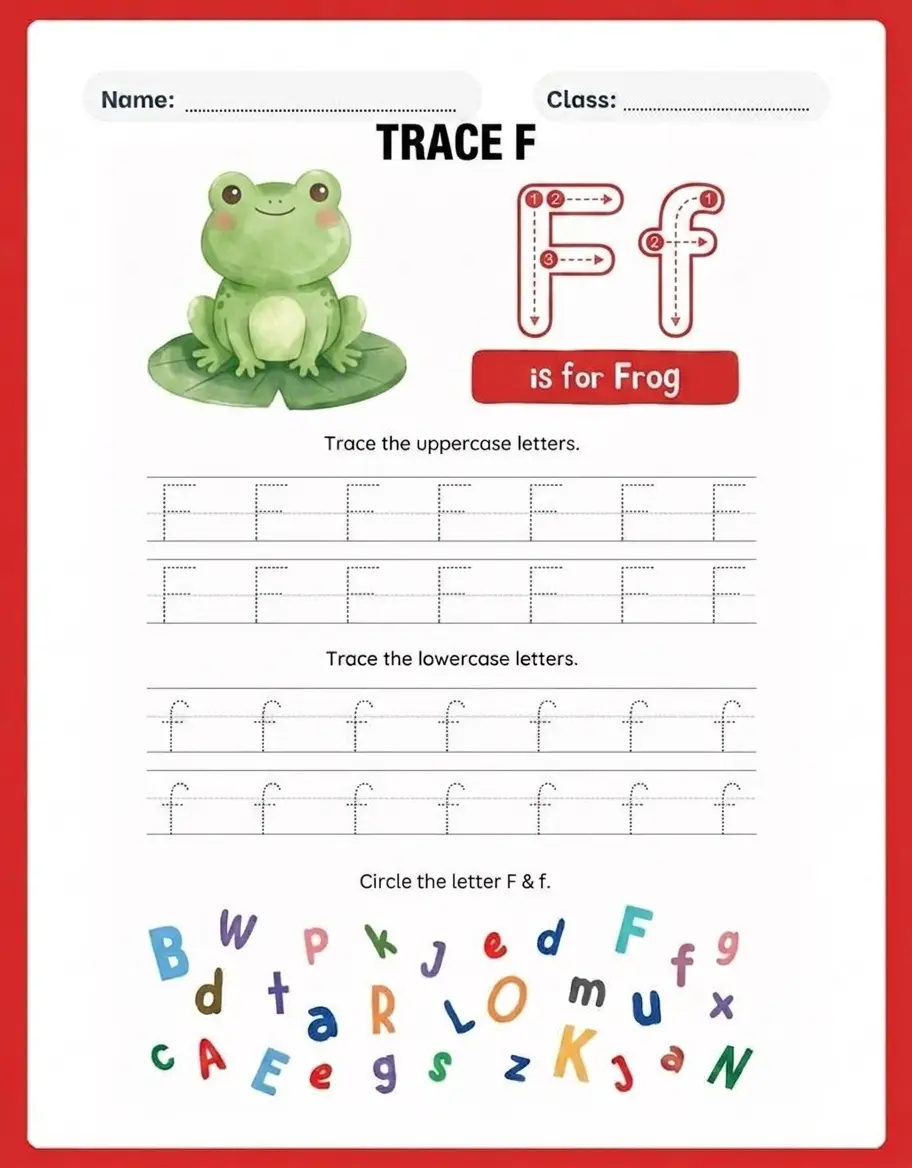
Learning to write the alphabet takes plenty of practice, and the letter F is a useful one for young learners to work on. These Letter F Tracing Worksheets give preschool and kindergarten children guided opportunities to practice both uppercase F and lowercase f while becoming more familiar with proper letter formation.
The worksheets include large tracing examples, guided writing practice, and additional opportunities to repeat the letter with less support. Some pages also connect the letter F with familiar picture words, giving children another way to recognize and remember the letter.
Parents can use the pages for short handwriting sessions at home, while teachers can include them in alphabet lessons, writing centers, morning work, or take-home practice.
What Are Letter F Tracing Worksheets?
Letter F tracing worksheets are printable handwriting activities designed to help children learn the shape and formation of uppercase F and lowercase f.
Instead of asking a beginning writer to create the letter completely from memory, tracing provides a visual path to follow. Children can watch where the letter begins, follow its lines, and repeat the movement several times.
The Letter F resources on Superstar Worksheets include different levels of guided practice. Children can work with large letter examples, step-by-step formation guides, and tracing exercises that gradually provide less visual support.
This makes tracing useful as a bridge between simply recognizing the letter and writing it independently.
What Children Can Learn With Letter F Tracing Worksheets
Regular, short handwriting practice can give children opportunities to work on several early literacy and writing skills.
1. Uppercase F recognition
Children become familiar with the appearance of the capital letter F and practice reproducing its basic structure.
2. Lowercase f recognition
Practicing lowercase f helps children understand that the same alphabet letter can have a different written form.
3. Letter formation
Guided examples show children how the individual strokes come together to form the letter.
4. Pencil control
Tracing requires children to control the movement of a pencil or crayon along a defined path.
5. Fine motor practice
Small, controlled writing movements provide useful practice for young children developing early handwriting skills.
6. Alphabet familiarity
Repeated exposure to F helps children become more comfortable identifying the letter when they encounter it in other words and activities.
7. Beginning-sound connections
F-themed picture prompts can help connect the written letter with words that begin with the /f/ sound. The Superstar Worksheets Letter F page includes picture examples such as a flower, foot, and frog.
What Is Included in the Letter F Tracing Worksheets?
The Letter F tracing collection contains several forms of guided practice rather than relying on one repeated worksheet format.
Children can practice:
- Uppercase F
- Lowercase f
- Large letter formation
- Guided stroke order
- Traceable letter examples
- Additional smaller tracing practice
- Writing with gradually reduced visual support
- Letter F picture associations
The collection also includes a Trace and Write Letter F activity that connects F with picture-based words and gives children opportunities to practice uppercase and lowercase F.
Because the individual pages have different purposes, parents and teachers can choose a simpler tracing activity for beginners and move toward less-supported writing as the child becomes more comfortable.
Who Can Use Letter F Tracing Worksheets?
Preschool children
Preschoolers who are beginning alphabet and pre-writing activities can use large, clearly guided F worksheets for introductory practice.
At this stage, the goal does not need to be perfect handwriting. Getting comfortable with the letter shape and following a basic path is already useful practice.
Kindergarten children
Kindergarten students can use F tracing worksheets for additional handwriting practice, alphabet review, or reinforcement after a classroom lesson.
Parents
Parents can use a single worksheet during a short home-learning session instead of turning handwriting practice into a long activity.
Teachers
Teachers can use the worksheets for morning work, literacy centers, small-group instruction, review activities, or take-home practice.
Homeschoolers
For homeschool families, the worksheets can fit naturally into an alphabet or early handwriting lesson.
How to Use Letter F Tracing Worksheets
A simple routine can make tracing practice more productive.
Step 1: Introduce the letter
Show the child an uppercase F and lowercase f. Ask them to identify the letter before beginning the worksheet.
Step 2: Talk about the letter sound
Say the /f/ sound together and introduce a familiar F word, such as frog, flower, or foot.
Step 3: Demonstrate the movement
Before handing over the pencil, demonstrate how the letter is formed. For uppercase F, children can practice the vertical stroke followed by the horizontal strokes.
Step 4: Let the child trace
Allow the child to follow the guided examples slowly. Encourage controlled movements rather than rushing through the page.
Step 5: Reduce assistance
Once the child is comfortable tracing, move toward examples that provide less guidance. This gives the child an opportunity to remember the letter formation.
Step 6: Finish with independent practice
Give the child an opportunity to attempt the letter without tracing support. Praise effort and improvement rather than expecting perfect formation immediately.
Tips for Helping Children Complete the Worksheet
Keep sessions short. Young children usually benefit more from focused practice than from completing many pages at once.
Use the worksheet alongside real objects. If you are practicing F, look around the room for things that begin with the letter or talk about words such as frog, fan, fish, and flower.
Say the strokes aloud. Verbal reminders can help children remember the sequence of movements.
Start large. Large letters are often easier for beginning writers to understand and trace before moving to smaller writing.
Don’t correct every little mistake. If the child understands the general formation, let them continue practicing before offering another demonstration.
Use different writing tools when appropriate. Pencils, crayons, and washable markers can make repeated practice feel less repetitive, provided the writing tool is comfortable and suitable for the child’s age.
Repeat over several days. Instead of completing the entire collection in one sitting, use a page at a time as part of regular alphabet practice.
Free Printable Letter F Tracing Worksheets
The Letter F tracing collection on Superstar Worksheets provides printable resources for children practicing uppercase and lowercase F. The collection includes guided tracing, large letter practice, formation exercises, and picture-based connections.
For printing, check the worksheet preview and your printer settings before making multiple copies. If your particular PDF is designed for standard US Letter paper, select the corresponding paper size and use the printer’s normal or actual-size setting when appropriate.
For repeated classroom or home practice, a page protector can also be useful. A child can trace over the worksheet with a suitable dry-erase marker and reuse the page rather than printing a new copy each time.
The best choice depends on the child’s stage of learning. A beginner may benefit from a highly guided page, while a child who already recognizes F may be ready for less-supported writing practice.
You can access the Letter F tracing resources here:
Get the Letter F Tracing Worksheets
Frequently Asked Questions
What age is a Letter F tracing worksheet suitable for?
Letter F tracing worksheets are generally useful for children in the preschool and kindergarten years, depending on their individual writing readiness. Younger children may benefit from large guided letters and short practice sessions, while kindergarten students can use tracing as reinforcement before moving toward independent writing.
How do I teach my child to write the letter F?
Begin by showing the child the shape of uppercase F and demonstrating its strokes slowly. Let the child trace a large example several times before asking them to write the letter independently. For lowercase f, demonstrate its formation separately because its shape differs from uppercase F.
Is letter F tracing suitable for preschool?
Yes. Letter F tracing can be appropriate for preschool children who are beginning to develop pre-writing and alphabet skills. Start with large, clearly guided letters and focus on following the path rather than expecting perfect handwriting.
Is this worksheet suitable for kindergarten?
Yes. Kindergarten children can use Letter F tracing worksheets to reinforce uppercase and lowercase letter formation. Tracing can also work well as review after an alphabet lesson or as additional handwriting practice at home.
What words can children learn with the letter F?
Children can practice familiar F words such as fish, frog, flower, fan, foot, and fox. Picture associations can make the connection between the written letter and its beginning sound easier to discuss during worksheet time.
How often should children practice letter F?
There is no need to make every session long. A few minutes of focused practice can be enough for a young learner. Repeating the activity across several short sessions can give the child more opportunities to remember the letter formation without becoming tired or frustrated.
Should children trace uppercase F or lowercase f first?
There is no single rule that works for every child. Uppercase F has a relatively straightforward structure, so it can be a comfortable starting point for some beginners. Once the child understands the basic idea of letter formation, introduce lowercase f and practice the difference between the two forms.
Can I use Letter F tracing worksheets at home?
Yes. Parents can use them as part of a short alphabet activity at home. Introduce the letter, say its sound, demonstrate the formation, let the child trace, and then give them an opportunity to try the letter independently.
What should I do after my child finishes tracing F?
Use the letter in another simple activity. Ask the child to find objects or pictures beginning with F, say several F words together, write F in the air with a finger, or practice writing the letter on a blank sheet. This helps move the skill beyond the worksheet.