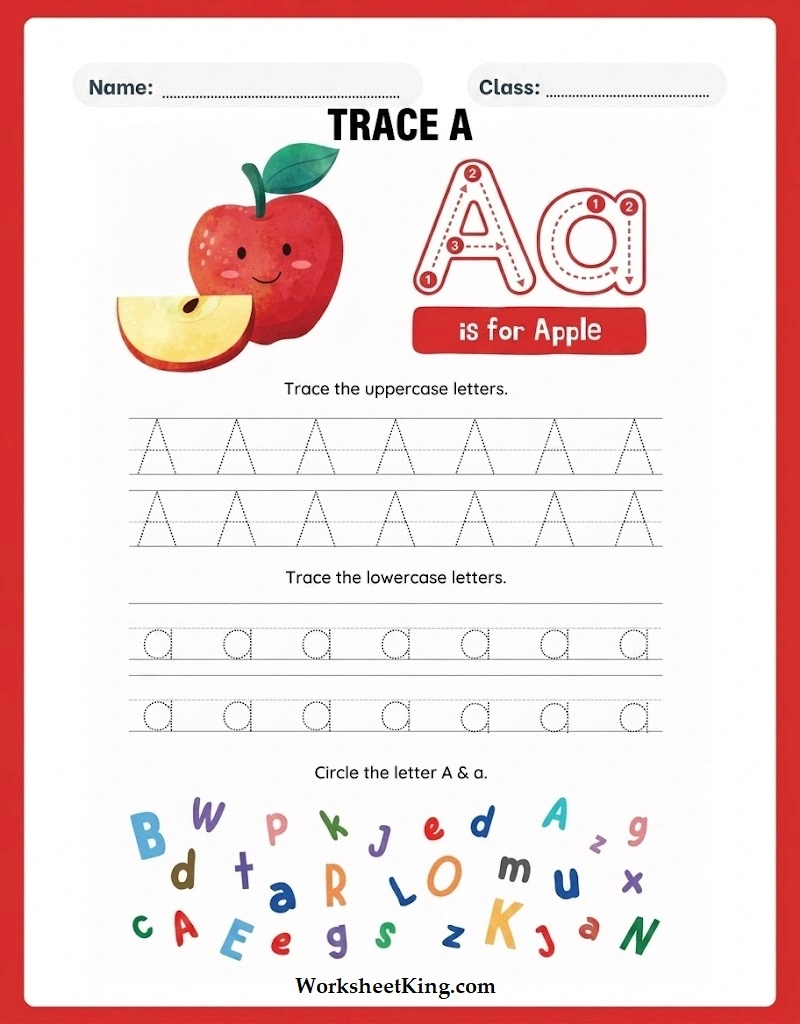
Learning to write the alphabet starts with understanding how letters are formed. Letter A tracing worksheets give young learners a simple way to practice the uppercase A and lowercase a while becoming familiar with their shapes and stroke patterns.
These printable worksheets are especially useful for preschool and kindergarten children who are beginning handwriting practice. The Letter A collection from Superstar Worksheets includes guided tracing activities, uppercase and lowercase letter practice, writing exercises, and pictures connected to words beginning with A.
For parents, teachers, and homeschoolers, a tracing page can also be an easy addition to an alphabet lesson. A child can practice a few rows at a time rather than trying to master the entire letter in one sitting.
What Are Letter A Tracing Worksheets?
Letter A tracing worksheets are printable handwriting activities that help children practice forming the first letter of the English alphabet.
The Letter A worksheets from Superstar Worksheets provide practice with both uppercase A and lowercase a. The collection includes large letter formation practice, guided lines, tracing exercises, and activities that connect the letter with objects beginning with A.
The goal isn’t simply to have children copy a letter repeatedly. Good tracing practice helps them notice the shape of the letter, follow a formation path, and gradually become more comfortable writing it independently.
For beginners, the large examples are particularly useful because children have more space to control their pencil and follow the intended strokes.
What Children Can Learn With Letter A Tracing Worksheets
A simple tracing activity can support several early handwriting and alphabet skills.
Letter recognition
Children become more familiar with what uppercase A and lowercase a look like. Repeated exposure helps them distinguish the letter from other alphabet characters.
Letter formation
Tracing gives children a visual path to follow as they learn how the letter is constructed. The Letter A materials include guided formation practice for both uppercase and lowercase forms.
Pencil control
Following dotted or guided lines requires children to control the movement of their writing tool. This makes tracing useful as part of early handwriting practice.
Uppercase and lowercase awareness
Children eventually need to recognize that A and a represent the same letter even though their shapes are different. Practicing both forms on the same topic helps introduce this relationship.
Beginning-letter connections
Some of the Letter A worksheets include pictures of objects beginning with A, such as an apple, ant, and astronaut. These visual connections can make the letter practice more meaningful.
What Is Included in the Letter A Tracing Worksheets?
The Letter A collection contains several types of tracing and handwriting practice rather than one identical worksheet.
Depending on the page, children can work with:
- Uppercase A formation
- Lowercase a formation
- Large Letter A tracing
- Guided step-by-step letter formation
- Repeated tracing practice
- Trace-and-write activities
- Beginning-letter picture connections
- Pictures associated with the letter A that children can color
The collection is designed to give children different levels of support as they practice the letter. The main Letter A page specifically describes both uppercase and lowercase exercises, guided lines, writing practice, and beginning-letter pictures.
That variety makes the worksheets useful for introducing the letter as well as providing additional handwriting practice.
Who Can Use Letter A Tracing Worksheets?
Preschool children
Preschoolers who are beginning to recognize letters can use large, guided Letter A activities as an introduction to handwriting.
At this stage, focus on comfortable pencil control and recognizing the letter rather than expecting perfect handwriting.
Kindergarten children
Kindergarten students can use Letter A worksheets for additional handwriting practice, review, or independent work.
The worksheets can also fit naturally into an alphabet lesson when children are learning uppercase and lowercase letters.
Parents
Parents can use a Letter A tracing page for short practice sessions at home. It can be useful after reading an alphabet book, during quiet learning time, or as a follow-up to a hands-on letter activity.
Teachers
Teachers can use the worksheets as handwriting practice, literacy-center work, morning activities, early-finisher work, or take-home practice.
Homeschoolers
For homeschool families, a printable Letter A worksheet can be included in an alphabet or early-reading lesson without requiring a complicated activity setup.
How to Use Letter A Tracing Worksheets
A little preparation can make tracing practice more productive.
1. Introduce the letter
Show the child uppercase A and lowercase a. Say the letter name and, when appropriate, talk about an A-word such as apple or ant.
2. Demonstrate the formation
Before asking the child to trace, demonstrate how the letter is formed. Use the worksheet’s visual guides and stroke directions as your reference.
3. Start with large letters
Large tracing letters give beginners more room to control their pencil. Encourage the child to follow the guide slowly instead of rushing from one letter to the next.
4. Move to smaller practice
Once the child is comfortable with the larger examples, continue with the smaller tracing rows.
The aim is gradual improvement rather than completing the page as quickly as possible.
5. Encourage independent writing
When the worksheet provides an opportunity for writing without as much guidance, let the child try the letter independently.
Avoid correcting every small imperfection. Instead, point out one useful improvement at a time.
6. Finish with a quick review
Ask the child to point to uppercase A and lowercase a. You can also ask them to name an object that begins with A.
This turns handwriting practice into a short alphabet-learning activity rather than an isolated pencil exercise.
Tips for Helping Children Complete the Worksheet
Keep practice sessions short. Young children often benefit more from a few focused minutes than from a long handwriting session.
Use the correct grip without making it stressful. If the child’s pencil grip is uncomfortable, gently adjust it and allow plenty of practice.
Let children work at their own pace. Some children will be ready to move from tracing to independent writing quickly, while others need more repetition.
Talk about the letter while writing. Say “A” as the child traces it, then connect it to familiar A-words such as apple or ant.
Use verbal stroke cues. For uppercase A, a simple cue such as “down, down, across” can help children remember the basic formation.
Don’t turn tracing into a test. The purpose is practice. Encourage effort and controlled movements instead of expecting every letter to look perfect.
Repeat the letter on different days. Returning to Letter A practice later can help reinforce what the child has already learned without making one worksheet session feel overwhelming.
Free Printable Letter A Tracing Worksheets
If you are looking for a printable resource for Letter A handwriting practice, the Superstar Worksheets Letter A collection provides multiple tracing options for young learners.
The worksheets include uppercase and lowercase Letter A practice, guided formation activities, large tracing examples, and beginning-letter picture connections.
You can use the pages as part of a preschool or kindergarten alphabet lesson, at-home handwriting practice, or a homeschool literacy activity.
For printing, choose the worksheet page you want to use and follow the download/print options provided on the resource page. Because paper-size requirements can vary between worksheets and printer settings, check the individual printable before printing a large batch.
For young children, ordinary pencils or age-appropriate writing tools work well for handwriting practice. Crayons can also be useful when the particular worksheet includes pictures intended for coloring.
Get the Letter A Tracing Worksheets:
Letter A Tracing Worksheets
Frequently Asked Questions
What age are Letter A tracing worksheets suitable for?
Letter A tracing worksheets are commonly useful for preschool and kindergarten learners who are beginning alphabet and handwriting practice. The best starting point depends on the child’s fine-motor control and familiarity with letters. Begin with larger guided letters when the child is new to writing and gradually introduce less-supported practice as their control improves.
How do I teach a preschooler to write the letter A?
Start by showing the child the uppercase A and demonstrating its basic stroke pattern. Let the child trace a large guided version before moving to smaller examples. Talking about familiar A-words such as apple can connect handwriting with alphabet recognition and early phonics practice.
Should children practice uppercase A or lowercase a first?
There is no need to make every child follow exactly the same sequence. Uppercase A can be visually straightforward to demonstrate, while lowercase a is also an important form children need to recognize and write. Practicing both forms gives children a more complete understanding of the letter.
Are Letter A tracing worksheets good for kindergarten?
Yes. Kindergarten children can use Letter A tracing worksheets for handwriting practice, alphabet review, and additional work after an initial lesson. Students who already recognize A can use tracing as a transition toward writing the letter independently.
How often should children practice Letter A?
Short, regular practice is usually more practical than one long session. A child might practice Letter A for a few minutes during an alphabet lesson and return to it later in the week. If the child becomes frustrated or tired, take a break and continue another time.
Can parents use Letter A tracing worksheets at home?
Yes. Parents can use them during home learning, alphabet review, quiet activity time, or as a follow-up to reading an alphabet book. Sitting with the child for the first few examples can help them understand the tracing direction before allowing them to continue independently.
What words can children learn with the letter A?
Children can explore simple A-words such as apple, ant, astronaut, acorn, and alligator. Choose words that are familiar to the child and use pictures or real objects when possible. The Letter A collection also includes beginning-letter picture associations.
What skills does letter tracing practice?
Letter tracing gives children practice with recognizing letter shapes, following a formation path, controlling a pencil, and developing familiarity with uppercase and lowercase letters. It can be one part of a broader early-writing routine that also includes drawing, pre-writing lines, copying letters, and independent writing.
What should I do after my child finishes the tracing worksheet?
Use the worksheet as a starting point for another short activity. Ask the child to find A in a favorite book, identify objects beginning with A, build the letter with playdough, or write A on a blank piece of paper. These activities give children opportunities to recognize and use the letter outside the worksheet.