Learning to write a new letter takes more than simply seeing it on an alphabet chart. Young children need repeated opportunities to look at the letter, follow its shape, practice its formation, and gradually become more confident writing it on their own.
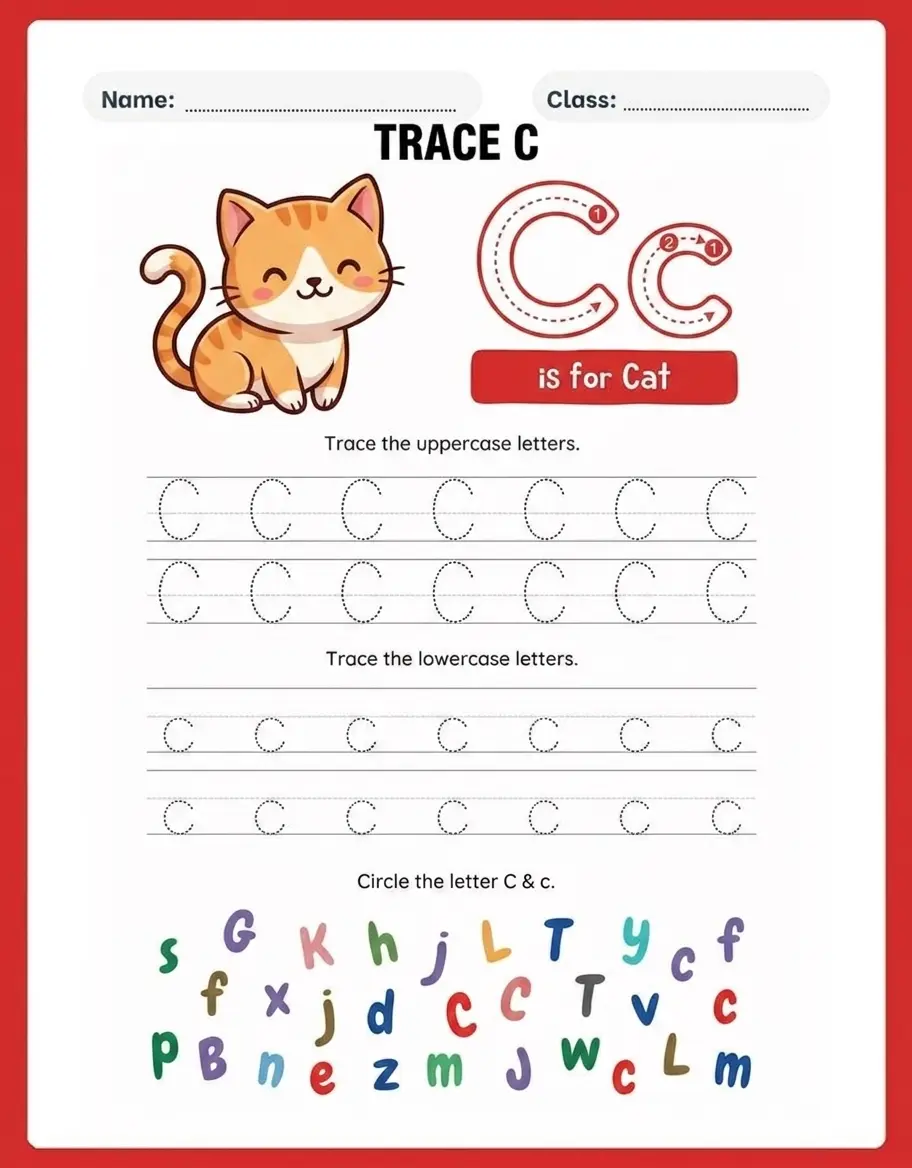
These Letter C Tracing Worksheets give preschool and kindergarten learners focused practice with uppercase C and lowercase c. The worksheets include guided tracing and letter-based picture practice, giving children a simple way to connect the written letter with familiar beginning sounds and words.
They can be useful during a classroom alphabet lesson, at a writing center, for homeschool practice, or as a short activity at home. The goal is not to make children rush through a page, but to give them comfortable, repeatable practice with one letter at a time.
What Are Letter C Tracing Worksheets?
Letter C tracing worksheets are printable handwriting activities designed to help children practice forming the uppercase C and lowercase c.
The letter C is a useful early handwriting letter because children need to learn how to control a curved stroke rather than relying only on straight lines. Guided tracing gives them a visual path to follow before they are expected to form the letter independently.
A good tracing activity can also reinforce alphabet recognition. Instead of practicing handwriting in isolation, children can see the letter C, trace it several times, and connect it with familiar C words and pictures.
The Letter C resources from Superstar Worksheets include uppercase and lowercase tracing practice, guided letter formation, and beginning-letter picture activities.
What Children Can Learn With This Worksheet
Letter C tracing practice can support several early-learning skills at the same time.
Letter recognition
Children become more familiar with the visual shape of C and c and learn to distinguish the letter from other alphabet characters.
Letter formation
Tracing gives children a model to follow while they learn the shape and movement needed to form the letter.
Pencil control
Following a curved line requires children to control their pencil movements and stay close to the intended path.
Uppercase and lowercase awareness
Practicing C and c helps children understand that the same letter can appear in different forms.
Beginning-sound awareness
Picture-based letter activities can help children connect the letter C with words that begin with the letter. The Superstar Worksheets Letter C resources specifically include beginning-letter pictures such as cactus and cat.
Early handwriting confidence
Repeated practice can make the movement of forming a letter feel more familiar, giving children a foundation for later independent writing.
What Is Included in the Letter C Tracing Worksheets?
The Letter C tracing collection includes several forms of practice rather than relying on one identical tracing line.
Children can work with:
- Uppercase C tracing
- Lowercase c tracing
- Large letter formation practice
- Guided or step-by-step letter formation
- Additional tracing opportunities
- Beginning-letter picture connections
- Letter-based coloring practice
The exact activities vary across the Letter C printable resources, so parents and teachers can choose the page that best matches a child’s current handwriting level. Superstar Worksheets describes its Letter C collection as including large tracing letters, uppercase and lowercase exercises, guided formation, and picture-based practice.
Who Can Use This Worksheet?
Preschool children
Preschool learners who are beginning to recognize alphabet letters can use simple C tracing activities as part of early handwriting practice.
For younger children, focus on following the shape rather than expecting perfect handwriting. A few careful attempts are often more useful than rushing through a full page.
Kindergarten children
Kindergarten students can use Letter C worksheets to reinforce letter formation and gain additional writing practice after the letter has been introduced in class.
Parents
Parents can use a printable worksheet for a short home-learning activity. It can work especially well as a focused five- to ten-minute handwriting session.
Teachers
Teachers can place the worksheet in a writing center, use it for individual practice, or include it as part of an alphabet lesson.
Homeschoolers
For homeschool families, a Letter C printable can become one small component of a broader lesson involving letter recognition, phonics, reading, and handwriting.
How to Use Letter C Tracing Worksheets
A simple routine can make tracing practice more productive.
1. Introduce the letter
Show the child a large C and say the letter name clearly. Let the child look at both uppercase C and lowercase c.
2. Talk about the letter shape
Point out that C has a curved shape. You can have the child draw a large C in the air with a finger before picking up a pencil.
3. Demonstrate the movement
Show the child where to begin and how to follow the tracing guide. For young learners, demonstrating slowly is usually more helpful than simply telling them to “trace the letter.”
4. Let the child trace
Allow the child to follow the dotted or guided letters independently. Encourage slow, controlled movements.
5. Practice again
Once the child is comfortable with the guided examples, provide opportunities to attempt the letter with less support.
6. Connect the letter to words
Talk about familiar C words. For example, you might say “C is for cat” and ask the child to identify the C sound at the beginning of the word.
This combination of seeing, saying, tracing, and writing gives the activity more purpose than tracing alone.
Tips for Helping Children Complete the Worksheet
Keep practice short. Young children do not need to complete a large amount of handwriting in one sitting. A short, focused session can be easier to manage.
Use a comfortable pencil grip. Make sure the child is sitting comfortably and has enough space to move their hand freely.
Trace with a finger first. If a child is struggling with pencil control, try having them follow the letter shape with a finger before using a pencil.
Model the letter. Write a large C yourself and let the child watch the movement before beginning the worksheet.
Don’t focus only on perfection. Early handwriting takes practice. Encourage the child to follow the general shape and gradually improve control.
Say the letter aloud. Connecting the visual letter with its name and sound can turn a handwriting exercise into broader alphabet practice.
Use coloring as a break. If the worksheet includes letter-related pictures to color, allow children to use that portion as a change of pace while continuing to reinforce the letter C.
Free Printable Letter C Tracing Worksheets
If you are looking for a printable resource for letter C handwriting practice, the Letter C collection on Superstar Worksheets provides several options for preschool and kindergarten learners.
The worksheets can be used at home, in classrooms, homeschool settings, or for additional handwriting practice. The collection includes uppercase and lowercase C activities as well as guided tracing and picture-based learning opportunities.
You can access the Letter C tracing resources here:
Get the Letter C Tracing Worksheets
Printing Tips
Before printing, check your printer settings and choose the appropriate paper size available for your location.
For repeated practice, teachers and parents can also place a printed page inside a page protector and use a dry-erase marker when the worksheet format is suitable. This allows children to practice the same formation more than once without immediately using another sheet.
For pencil practice, ordinary printer paper can work well for short activities. If children will be coloring pictures as part of the worksheet, slightly heavier paper may be preferable.
Frequently Asked Questions
What age is a Letter C tracing worksheet suitable for?
Letter C tracing worksheets are generally useful for children who are beginning formal alphabet and handwriting practice, particularly preschool and kindergarten learners. The right time depends on the individual child’s readiness. Some children may benefit from simple tracing earlier, while others need more pre-writing practice first.
How do I teach a preschooler to write the letter C?
Start with the shape rather than expecting independent writing immediately. Show the child a large C, demonstrate the curved movement, and let them trace it with a finger before using a pencil. Once they understand the movement, introduce guided tracing and gradually reduce the amount of help.
Should children practice uppercase C or lowercase c first?
There is no single rule that works for every child. Uppercase C is often visually simple because it consists primarily of one large curved stroke. However, children also need to become familiar with lowercase c, so practicing both forms is useful once they are ready.
Is this worksheet suitable for kindergarten?
Yes. Letter C tracing activities can be useful for kindergarten handwriting practice, especially when children are learning or reviewing uppercase and lowercase letter formation. They can also be used for extra practice when a child needs more repetition before moving toward independent writing.
How often should children practice letter C?
Short, regular practice is usually more manageable than long handwriting sessions. A parent or teacher might include letter C practice several times during a week, depending on the child’s overall alphabet and handwriting program. The goal should be comfortable repetition rather than completing as many pages as possible.
What words can children learn with the letter C?
Children can practice familiar words that begin with C, such as cat, cactus, carrot, car, or cake. When using picture-based activities, ask the child to name the object and listen for the beginning sound.
Can I use a Letter C worksheet at home?
Yes. Parents can use a Letter C worksheet as a short home-learning activity. Try pairing tracing with other simple activities, such as finding objects around the house that begin with C, making a large C with playdough, or writing C in the air.
How can I help a child who struggles with tracing?
Reduce the difficulty instead of pushing the child to finish the page. Let them practice large movements first, trace with a finger, or draw curved lines on a blank sheet. Once pencil control improves, return to the guided letter tracing activity.
Can Letter C tracing practice support handwriting skills?
Tracing gives children an opportunity to practice controlled pencil movements and become familiar with letter formation. It is only one part of handwriting development, so it works best alongside other activities such as drawing, pre-writing lines, letter recognition, and independent writing.