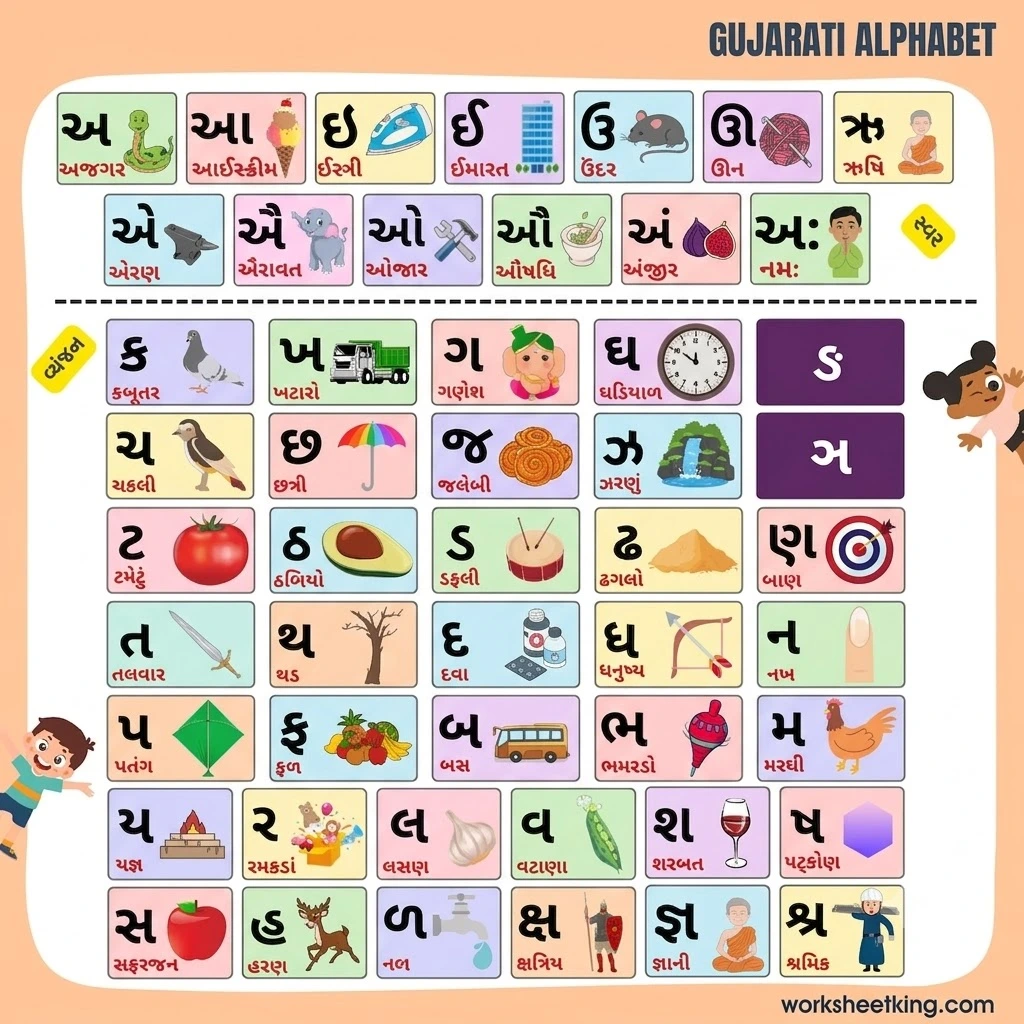
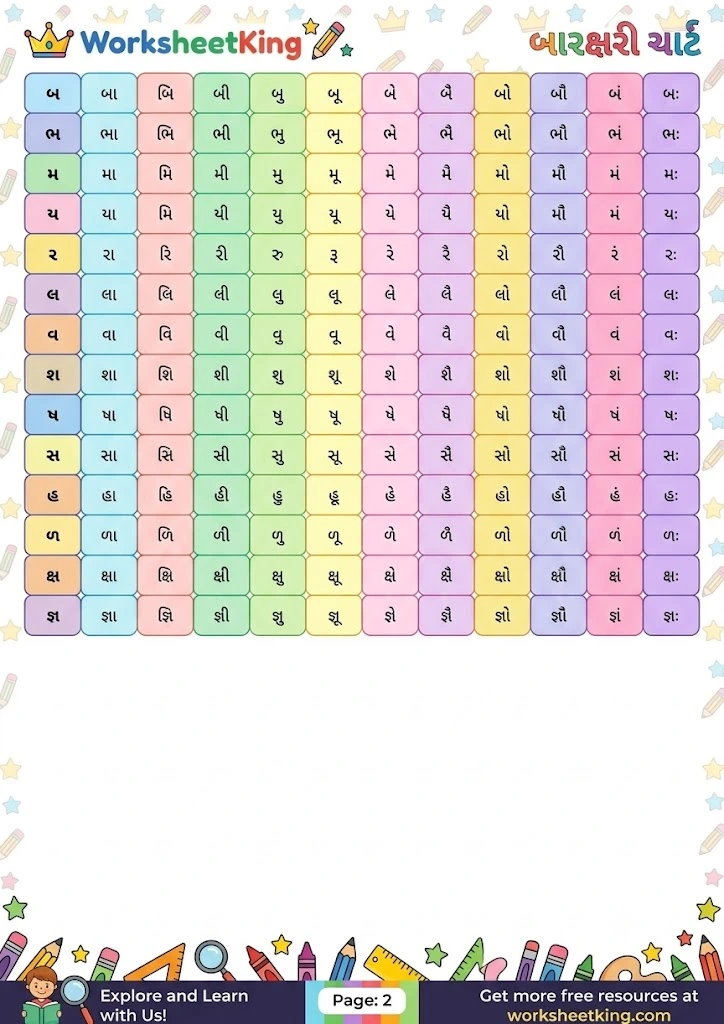
Learning Gujarati becomes much easier when children move step by step from individual letters to combinations of consonants and vowel signs. A Gujarati Barakhadi Worksheet can give children a simple way to review these combinations, recognize Gujarati matras, and practise reading and writing at their own pace.
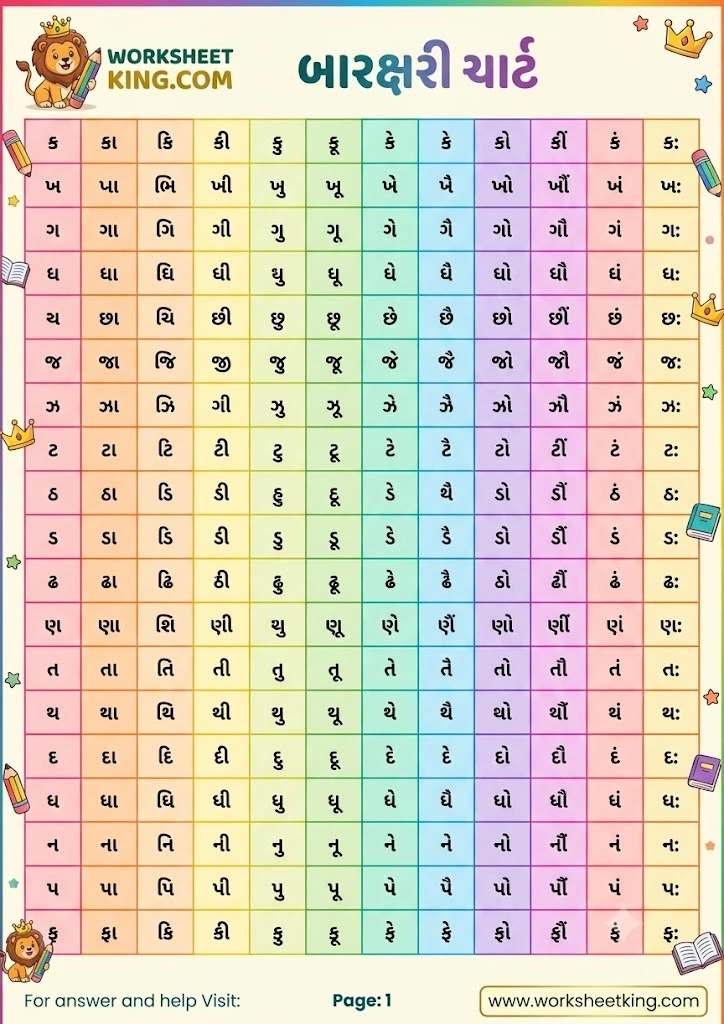
Gujarati Barakhadi, also written as Gujarati Barakshari or બારાક્ષરી, is formed by combining Gujarati consonants with vowel signs. For example, the consonant ક can appear as ક, કા, કિ, કી, કુ, કૂ, કે, કૈ, કો, કૌ, કં and કઃ. The linked Learnly Hub resource provides a Gujarati Barakhadi chart, pronunciation information, downloadable PDF material, and references to worksheets for regular practice.
This makes Barakhadi practice useful for children who are beginning to read and write Gujarati, as well as parents and teachers looking for additional Gujarati language practice at home or in the classroom.
What Is Gujarati Barakhadi?
Gujarati Barakhadi, or Gujarati Barakshari (ગુજરાતી બારાક્ષરી), is a systematic way of combining Gujarati consonants with vowel signs.
A child may already recognize a consonant such as ક. The next step is understanding how its sound changes when different vowel signs are added:
ક → કા → કિ → કી → કુ → કૂ → કે → કૈ → કો → કૌ → કં → કઃ
The Learnly Hub reference explains Barakhadi in this way: vowel signs are combined with consonants in sequence to create the different forms used for practice.
Learning these combinations helps children become more familiar with the relationship between Gujarati letters, vowel sounds, and written forms.
It is generally helpful for children to have some familiarity with the Gujarati alphabet before beginning extensive Barakhadi practice. The linked resource also recommends knowing the basic vowels and consonants first.
What Children Can Learn With a Gujarati Barakhadi Worksheet
A Barakhadi practice sheet is more than a page of Gujarati letters. Used regularly, it can give children structured exposure to several important parts of Gujarati literacy.
Recognizing Gujarati letters
Children can become more familiar with consonants and the different forms they take when vowel signs are added.
Understanding Gujarati matras
Gujarati vowel signs, or matras, change the form and pronunciation of a consonant. Seeing these combinations repeatedly can help children notice where the vowel sign appears and how it changes the written form.
Reading syllable combinations
Barakhadi gives children practice reading combinations such as:
- ક
- કા
- કિ
- કી
- કુ
- કૂ
- કે
- કૈ
- કો
- કૌ
The same pattern can then be observed with other consonants.
Writing practice
When children copy or write Barakhadi combinations, they get an opportunity to practise Gujarati letter formation and become more comfortable writing the script.
Building a foundation for Gujarati words
Barakhadi is useful as a bridge between recognizing individual Gujarati letters and working with written Gujarati words. Children can first become comfortable with common letter-and-vowel combinations before moving toward more independent reading and writing.
What Is Included in the Gujarati Barakhadi Resource?
The linked Learnly Hub resource includes a detailed Gujarati Barakhadi chart covering combinations from ક through જ્ઞ. It also includes Gujarati forms alongside Hindi and English pronunciation references.
The resource shows combinations such as:
ક, કા, કિ, કી, કુ, કૂ, કે, કૈ, કો, કૌ, કં, કઃ
and continues the same pattern through Gujarati consonants including ખ, ગ, ઘ, ચ, છ, જ, ઝ and others, eventually reaching combinations for ક્ષ and જ્ઞ.
The page also contains a section for Gujarati Barakhadi images and a downloadable PDF. It specifically states that the PDF is available free of charge and can be saved on a device.
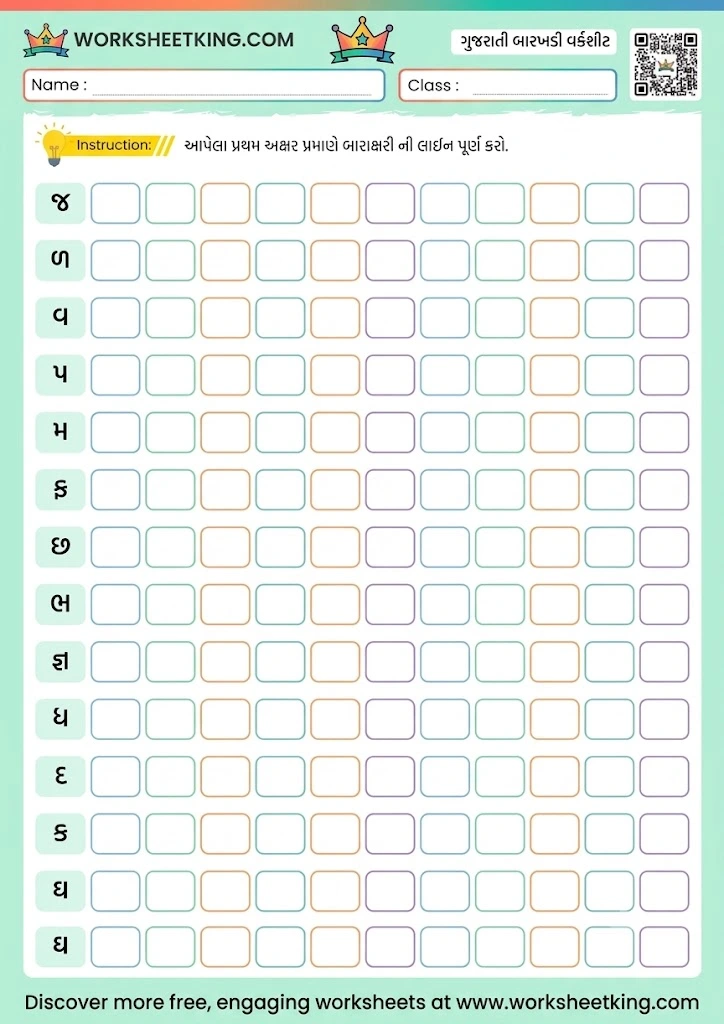
Because worksheet layouts can vary, parents and teachers should check the individual printable page before assuming that a particular worksheet contains tracing boxes, matching exercises, coloring activities, or other tasks.
Who Can Use a Gujarati Barakhadi Worksheet?
Children learning Gujarati
Young learners who are beginning Gujarati reading and writing can use Barakhadi practice to reinforce letter-and-vowel combinations.
Preschool and kindergarten learners
Barakhadi can be introduced gradually when children are ready for Gujarati letter recognition and early writing practice. The amount of material should be adjusted to the child’s existing knowledge rather than expecting them to memorize the entire chart at once.
Parents
Parents can use printable Gujarati learning resources for short practice sessions at home. A few minutes of focused practice can be easier for a young child than completing a large page all at once.
Teachers
Gujarati-language teachers can use Barakhadi charts and worksheets as supplementary classroom practice, revision material, or homework.
Homeschooling families
Printable resources can also be useful for families creating a Gujarati reading and writing routine at home.
How to Use a Gujarati Barakhadi Worksheet
The easiest approach is to introduce Barakhadi gradually.
1. Review the Gujarati alphabet first
Before starting a large Barakhadi chart, check whether the child can recognize the Gujarati consonants and vowels being used.
If individual letters are still difficult, spend some time reviewing them first.
2. Start with one consonant
Choose a familiar consonant such as ક.
Read the combinations together:
ક – કા – કિ – કી – કુ – કૂ – કે – કૈ – કો – કૌ
Say each form aloud while pointing to it.
3. Focus on the vowel change
Instead of asking children to memorize a long row immediately, draw their attention to the vowel sign.
For example:
ક → કા
Then compare:
ક → કિ → કી
This helps children notice that the consonant remains recognizable while the vowel sign changes.
4. Add another consonant
Once the child is comfortable with one row, move to another consonant such as ખ or ગ.
This lets the child begin recognizing the repeated structure of Barakhadi.
5. Practise writing
If the worksheet includes writing space, encourage the child to copy the forms carefully rather than rushing through the entire page.
6. Review instead of cramming
Short, repeated practice is often more manageable for young learners than trying to complete every combination in one sitting.
Tips for Helping Children Complete the Worksheet
Keep practice short.
For younger children, a short session can be more productive than a long writing exercise.
Read aloud together.
Ask the child to say the Gujarati combination while looking at it. This connects the written form with its sound.
Point out the matra.
When a child makes a mistake, identify the vowel sign that changed instead of simply giving the correct answer.
Use familiar combinations first.
Start with letters and forms the child has already encountered.
Avoid turning practice into a test.
The goal is familiarity and confidence. Correct mistakes gently and give the child another chance.
Mix reading and writing.
One session can involve reading a row aloud, while another can focus more heavily on writing.
Use the chart for reference.
If the child forgets a combination, let them look at the chart rather than making them guess repeatedly.
Free Printable Gujarati Barakhadi
If you are looking for a Gujarati Barakhadi printable worksheet or PDF, a printable resource can be convenient for home learning and classroom practice.
The Learnly Hub page provides Gujarati Barakhadi material, including a downloadable PDF described on the page as free. It also points readers toward Gujarati Barakhadi worksheets for regular practice.
Printing suggestions
For a printable Gujarati learning sheet:
- Use a clear print setting so Gujarati characters remain easy to read.
- A4 paper is a practical choice for most home and classroom printers.
- Use thicker paper if the worksheet is intended for repeated handling.
- Keep a printed reference chart available while the child practises.
- If the worksheet contains writing exercises, choose a writing tool that gives the child enough control over the letters.
For younger children, it can be helpful to print only the pages needed for the current lesson rather than presenting a very large amount of material at once.
How Often Should Children Practise Gujarati Barakhadi?
There is no single practice schedule that works for every child.
Instead of focusing on completing a certain number of pages, pay attention to whether the child can recognize the combinations more comfortably over time.
A simple routine might look like this:
Day 1: Review one or two consonant rows.
Day 2: Read the same rows aloud.
Day 3: Practise writing selected combinations.
Day 4: Review previous combinations and introduce another row.
Day 5: Mix familiar combinations for recognition practice.
The exact pace can be adjusted according to the child’s age, attention span, and existing Gujarati knowledge.
Frequently Asked Questions
What is Gujarati Barakhadi?
Gujarati Barakhadi, also called Gujarati Barakshari or બારાક્ષરી, is a pattern of Gujarati consonants combined with vowel signs. For example, ક can combine with different vowel signs to form ક, કા, કિ, કી, કુ, કૂ, કે, કૈ, કો, કૌ, કં and કઃ.
What age is a Gujarati Barakhadi worksheet suitable for?
It is most useful for children who have started learning Gujarati letters and are ready to practise consonant-vowel combinations. The exact age can vary. Preschool and kindergarten children may use simplified practice, while older beginners can work through more of the chart.
How can I teach Gujarati Barakhadi to a child?
Start with Gujarati vowels and consonants, then introduce one consonant row at a time. Read the combinations aloud, point out the changing vowel signs, and let the child practise writing them. Gradually add new rows as earlier combinations become familiar.
Is Gujarati Barakhadi suitable for kindergarten?
Yes, it can be used as Gujarati literacy practice for kindergarten children who are already learning Gujarati letters. For younger learners, it is better to introduce a small number of combinations at a time instead of expecting them to learn the complete chart immediately.
Can children practise Gujarati Barakhadi at home?
Yes. Parents can use a printed chart or worksheet for short reading and writing sessions. Reading the combinations aloud together and reviewing previously learned rows can make home practice more useful.
Is there a Gujarati Barakhadi PDF?
The Learnly Hub page includes a Gujarati Barakhadi PDF section and states that its PDF is available free for users to save and share.
What are Gujarati matras?
Gujarati matras are vowel signs used with consonants to represent different vowel sounds in written Gujarati. For example, the forms ક, કા, કિ and કી demonstrate how the consonant changes when different vowel signs are used.
Should children learn Gujarati letters before Barakhadi?
It is generally helpful. Children who can already recognize basic Gujarati vowels and consonants have a foundation for understanding how those letters combine in Barakhadi. The Learnly Hub resource similarly recommends familiarity with the Gujarati alphabet before learning Barakhadi.
How can I make Gujarati Barakhadi practice more interesting?
Keep sessions short and vary the activity. Children can read combinations aloud, copy selected rows, identify a particular vowel sign, or review previously learned combinations. Avoid making every practice session about completing the entire chart.
What should children learn after Gujarati Barakhadi?
Once children are comfortable recognizing common consonant-vowel combinations, the next step can be simple Gujarati words and reading practice. At that stage, children can begin connecting the combinations they have learned with meaningful vocabulary.
Conclusion
A Gujarati Barakhadi Worksheet can be a useful addition to early Gujarati literacy practice. It gives children repeated exposure to consonant-vowel combinations and helps them become more familiar with Gujarati matras, reading patterns, and written forms.
The key is to keep practice manageable. Start with the Gujarati alphabet, introduce a few Barakhadi combinations at a time, read them aloud, and gradually add writing practice. With regular review, children can build a stronger foundation for reading and writing Gujarati.
For parents, teachers, and homeschoolers, printable Gujarati Barakhadi resources provide a convenient way to bring this practice into everyday learning.